Scaling a digital marketing agency is notoriously difficult when fulfillment bottlenecks slow you down. As your client roster grows, the demand for high-quality search engine optimization often outpaces your internal capacity. Hiring full-time, in-house specialists is expensive, and managing multiple client campaigns simultaneously can quickly drain your resources.
This is where SEO Agency White-Labeling becomes a game-changing strategy for web professionals. By partnering with a dedicated fulfillment provider, you can offer premium optimization services under your own brand name. You maintain the client relationship, while the partner handles the technical heavy lifting behind the scenes.
For agencies managing extensive portfolios, integrating white-label services with efficient Agency & Multi-Website Packages allows for seamless scaling. It bridges the gap between client demand and your agency’s delivery capabilities. Let’s explore how this model works and why it is essential for long-term agency growth.
Key Takeaways
SEO Agency White-Labeling allows digital agencies to outsource their search optimization fulfillment to a third-party provider while reselling the services under their own brand. This model reduces overhead costs, enables rapid scalability, and allows agencies to manage multiple client websites efficiently without hiring in-house staff.
What is SEO Agency White-Labeling?
At its core, SEO Agency White-Labeling is a strategic B2B partnership between a client-facing agency and a specialized fulfillment provider. The primary agency sells search engine optimization services to their clients, but the actual execution is outsourced. The end client remains completely unaware of the third-party involvement.
This arrangement is highly beneficial for web designers, PR firms, and digital marketing consultants who want to expand their service offerings. Instead of turning away clients who need search visibility, you can confidently say yes to complex campaigns. The white-label provider works invisibly as an extension of your own team.
For a local New Zealand agency, trust is everything. When you outsource your fulfillment, you are essentially trusting a third party with your hard-earned reputation. This is why the white-label model is designed around absolute discretion and brand protection.
Furthermore, this model perfectly complements existing services. If you are primarily a web design agency, your clients will inevitably ask about search visibility once their new site launches. Instead of sending them to a competitor, you can fulfill that need in-house using your white-label partner.
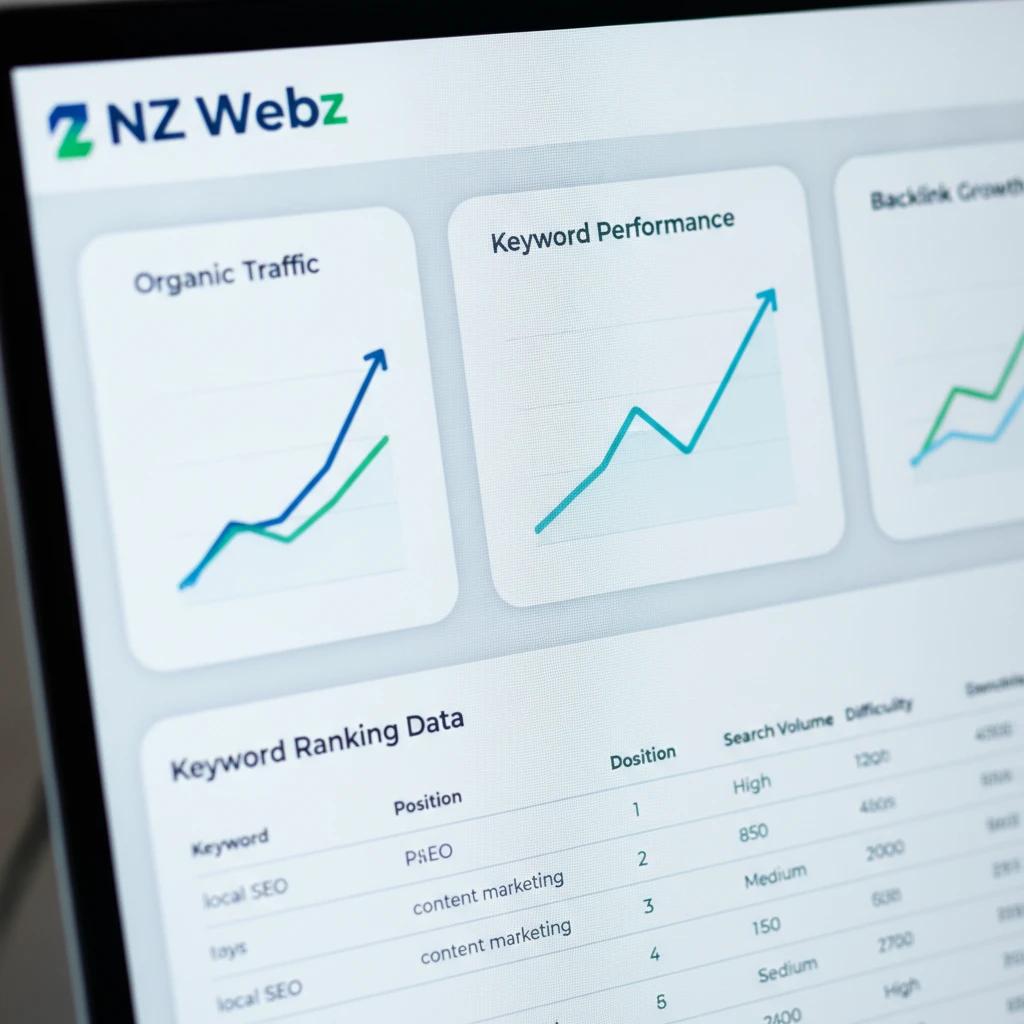
Every deliverable, from technical site audits to monthly performance dashboards, is fully rebranded with your agency’s logo and color scheme. This ensures a cohesive brand experience for your clients while protecting your business relationships. It is the ultimate leverage for agencies utilizing Agency & Multi-Website Packages to manage numerous domains efficiently.
How the White-Label Partnership Model Works
The mechanics of a white-label partnership are straightforward but require seamless coordination to be effective. First, your agency secures the client and determines their specific search visibility goals. You then purchase the appropriate wholesale optimization package from your chosen white-label partner.
The onboarding process is typically seamless. A quality partner will provide you with an intake form where you detail the client’s industry, target keywords, and geographic focus. This information forms the foundation of the initial site audit and strategy formulation.
Once the campaign begins, the fulfillment team executes the strategy, which may include on-page optimization, content creation, and local citation building. They compile the results into a raw data format or a pre-branded template. Your agency reviews the progress, adds specific strategic insights, and presents the final report to the client.
During the campaign lifecycle, your agency acts as the strategic bridge. The fulfillment team might identify new keyword opportunities or technical errors that need addressing. They flag these issues in your dashboard, allowing you to proactively reach out to your client with solutions.
This model allows you to focus entirely on client acquisition, account management, and high-level strategy. You control the retail pricing, meaning you can set your own profit margins based on the value you provide. It effectively transforms fixed payroll costs into variable costs that scale directly with your revenue.
Key Benefits of White-Label SEO for Growing Agencies
Scaling an agency traditionally requires significant capital investment in recruitment, training, and premium software tools. SEO Agency White-Labeling bypasses these financial hurdles entirely. By leveraging an established provider’s infrastructure, you gain immediate access to enterprise-level tools and seasoned experts without the overhead.
This operational efficiency directly impacts your agency’s profitability and agility. Industry data shows that agencies utilizing white-label fulfillment often achieve profit margins between 40% and 60% on their search marketing retainers. You can rapidly onboard new clients without worrying about internal capacity bottlenecks.
Industry benchmarks show that agencies utilizing white-label fulfillment typically maintain a gross profit margin of 40% to 60% on their search marketing retainers.
Another significant advantage is the ability to offer a broader spectrum of services. An in-house team might excel at content creation but lack deep technical knowledge. A white-label provider employs specialized departments for every facet of search optimization, ensuring your clients receive well-rounded campaigns.
This comprehensive approach is particularly valuable for agencies managing e-commerce clients or large national brands. These complex campaigns require a diverse skill set that is difficult to replicate with a small internal team.
Furthermore, this model significantly reduces your agency’s risk profile. If a client pauses their campaign, you simply pause the white-label service, avoiding the financial strain of idle in-house staff. It provides the ultimate flexibility for agencies managing fluctuating client rosters and diverse multi-website portfolios.
The global search optimization market is expanding rapidly, making it a lucrative service to offer. As businesses increasingly rely on digital discovery, the demand for professional search visibility continues to surge. Offering these services through a white-label partner ensures you capture this growing market share.
| Operational Feature | In-House SEO Team | White-Label SEO Partner |
|---|---|---|
| Overhead Costs | High (Salaries, benefits, software) | Low (Pay per active campaign only) |
| Scalability | Slow (Requires hiring and training) | Instant (Capacity managed by partner) |
| Service Offerings | Limited by staff expertise | Comprehensive suite of expert services |
| Financial Risk | High (Fixed costs during slow months) | Low (Costs scale directly with revenue) |
Core White-Label SEO Services You Can Resell
When you partner with a comprehensive fulfillment provider, you unlock a diverse suite of specialized services. Local search optimization is often the most requested service, helping small businesses dominate their regional markets. This includes managing local directory listings and ensuring consistent data across platforms.
For agencies targeting specific regions like Auckland or Wellington, local visibility is paramount. A white-label partner will build high-quality regional citations and optimize Google Business Profiles. This localized approach is critical for tradespeople and service providers who rely on neighborhood discovery.
Technical optimization is another critical pillar that requires deep expertise. Your white-label SEO partner handles complex tasks like site speed enhancements, schema markup implementation, and mobile-first indexing corrections. These technical foundations are vital for long-term search visibility but are notoriously difficult to execute without specialized knowledge.
If you manage multiple clients, look for white-label partners offering bulk agency packages. This streamlines your billing and provides a centralized dashboard for all your client campaigns.
Beyond standard local and technical optimization, advanced content strategies are a major component of white-label offerings. This includes in-depth keyword gap analysis, competitor research, and the creation of long-form, authoritative blog content designed to capture informational search intent.
Link building remains one of the most challenging aspects of search optimization. Reputable white-label partners utilize established outreach networks to secure high-quality, relevant backlinks. This manual, relationship-based approach is far superior to automated link schemes and is crucial for building long-term domain authority.
By outsourcing these resource-intensive elements, you ensure your clients receive consistent, high-quality deliverables that drive measurable organic growth. Your agency simply manages the relationship while the partner executes the heavy lifting.
The Importance of Custom-Branded Client Reporting
Transparency and communication are the bedrock of client retention in the digital marketing space. However, delivering raw data exports to clients often leads to confusion and frustration. Custom-branded reporting translates complex metrics into digestible, visually appealing insights that highlight your agency’s value.
A premium white-label partner will provide reports that integrate seamlessly with your brand identity. These documents should feature your logo, use your brand colors, and speak in your agency’s tone of voice. When clients see consistent, professional reporting, it reinforces their trust in your expertise and justifies their ongoing monthly retainer.
Always ensure that every deliverable, audit, and monthly performance report is fully customized with your agency’s logo and color palette before presenting it to the end client.
Effective reporting also serves as a powerful upselling tool. By clearly demonstrating the ROI of current campaigns, you can easily pitch additional services or larger multi-website packages. The data does the selling for you, backed by the robust execution of your fulfillment partner.

How to Choose the Right White-Label SEO Partner
Selecting the right fulfillment partner is arguably the most critical decision your agency will make. Not all providers maintain the same quality standards, and a poor partner can irreparably damage your agency’s reputation. You must prioritize providers who emphasize manual quality control and ethical, sustainable optimization techniques.
Look for a partner that offers transparent communication and clear service-level agreements. They should be willing to share their methodologies and provide case studies demonstrating their success. Avoid providers who rely on automated, spammy link-building tactics that violate search engine guidelines and put your clients at risk.
Reputable white-label providers will never guarantee specific search engine positions. Avoid any partner promising instant first-page results, as this often indicates risky, automated spam tactics.
Don’t hesitate to ask for sample reports during the vetting process. Reviewing a sample allows you to assess the depth of their data analysis and the quality of their white-label branding capabilities. If the reports look generic or confusing, it will reflect poorly on your agency.
Additionally, consider the provider’s communication style. You need a partner who is responsive and proactive, not one who disappears after the monthly invoice is paid. A dedicated account manager who understands your agency’s specific goals is a strong indicator of a high-quality partnership.
It is also crucial to evaluate their capacity for managing Agency & Multi-Website Packages. Your partner must have the infrastructure to handle bulk orders and complex, multi-location campaigns efficiently. A robust, scalable partner will grow alongside your agency, providing consistent quality regardless of your client volume.
When evaluating potential partners, consider these essential criteria:
- Strict adherence to manual quality control and ethical optimization practices.
- Comprehensive, customizable reporting dashboards that integrate your branding.
- Dedicated account managers who understand the nuances of the New Zealand market.
- Transparent pricing structures that allow for healthy agency profit margins.
Best Practices for Managing Client Expectations
Even with the best SEO Agency White-Labeling partner, campaign success relies heavily on how you manage your clients. Search optimization is a long-term strategy, and setting realistic timelines from day one is essential. Educate your clients that meaningful organic growth typically takes three to six months to materialize.
Maintain regular communication and frame the white-label reports within the context of the client’s broader business goals. Don’t just hand over a PDF; schedule a monthly review call to explain the data and outline the strategy for the upcoming month. This proactive approach positions you as a strategic advisor rather than a mere service vendor.
It is also important to educate clients on the evolving nature of search algorithms. Search engines frequently update their ranking criteria, which can cause temporary fluctuations in visibility. By preparing your clients for these normal variations, you prevent panic and maintain their trust during algorithm updates.
Finally, always tie search metrics back to real-world business outcomes. While increased traffic and higher keyword rankings are positive indicators, your clients ultimately care about leads, phone calls, and revenue. Ensure your reporting highlights these tangible conversions to prove ongoing value.