
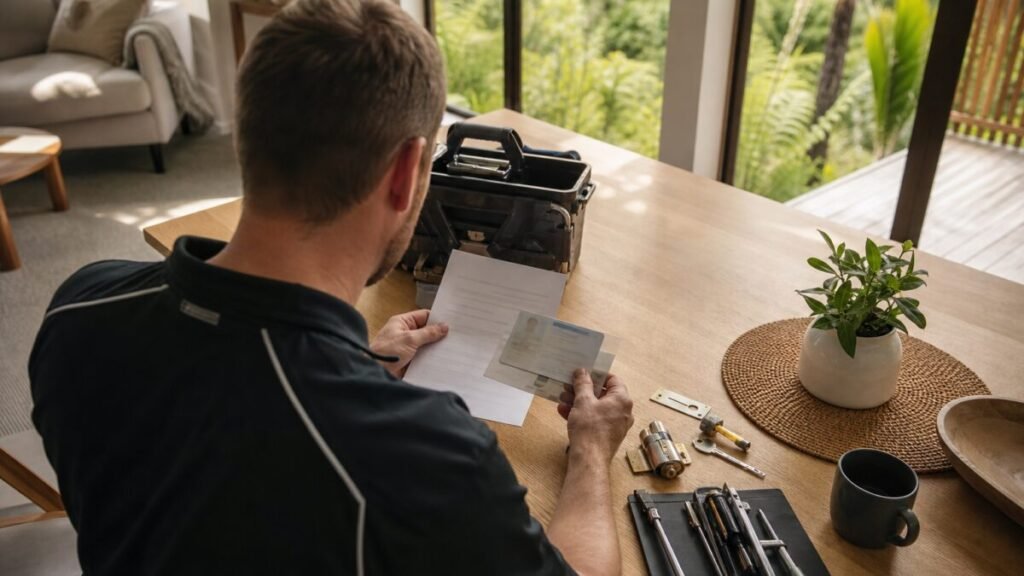
Check the Master Locksmiths Association of Australasia directory at findamasterlocksmith.co.nz before you call anyone—locksmithing has no licence requirement in New Zealand, so MLAA membership is your primary way to verify a locksmith holds trade qualifications, has passed police checks, and carries insurance. Anyone can call themselves a locksmith without formal qualification because the title is not protected, which means you’re responsible for credential verification rather than relying on government licensing.
MLAA Membership: Your Primary Verification Tool
The Master Locksmiths Association of Australasia requires member businesses to employ trade-qualified locksmiths holding the New Zealand Apprenticeship in Locksmithing at Level 4, pass police checks, and meet insurance requirements. This three-part verification process is the closest thing New Zealand has to locksmith licensing, and it’s the first credential you should check.
Visit findamasterlocksmith.co.nz and search by region before you make calls. If a locksmith claims MLAA membership but doesn’t appear in the directory, ask for their membership number and verify it directly with the association. Legitimate members expect this check and won’t hesitate to provide verification details.
What the Level 4 Apprenticeship Covers
The Level 4 apprenticeship includes key cutting, lock installation and repair, master key system design, safe operation, and security hardware specification. This formal training distinguishes qualified locksmiths from those who learned through informal experience or online tutorials. When you hire an MLAA member, you’re hiring someone who has completed structured technical education rather than someone who simply owns lock picks.
Police checks screen for criminal history that creates obvious security risks when a tradie has access to your property and security systems. Insurance requirements protect you financially if the locksmith damages your door, breaks a window during a lockout, or installs a lock incorrectly that fails during a burglary attempt.
Locksmith Verification Checklist
Use this checklist before you book any locksmith service:
- Search findamasterlocksmith.co.nz for the business name and verify active MLAA membership
- Ask for the locksmith’s membership number and confirm it matches the directory listing
- Request proof of public liability insurance and confirm coverage amount (minimum $1 million recommended)
- Get written quotes from three MLAA-registered locksmiths specifying lock brands, grades, and total costs including GST
- Verify PSPLA licensing if the job involves alarms, safes, or security cameras
- Confirm warranty terms for both parts and labour in writing before work begins
- Check online reviews specifically mentioning completed work quality, not just response times
Getting and Comparing Quotes
Contact at least three MLAA-registered locksmiths and request detailed written quotes before you book. A professional quote should break down call-out fees, hourly rates, lock hardware costs (with specific brands and grade numbers), estimated completion time, warranty coverage, and total price including GST.
When you call, provide specific details: door material (wood, aluminium, uPVC), current lock type if you know it, whether this is a lockout or planned installation, and any security requirements like insurance compliance or strata building standards. A reputable locksmith should be able to provide key control documentation for master key systems and transparent pricing for lock grade specifications, so ask about these details even if you don’t need them yet—their response indicates professionalism.
Questions to Ask When Getting Quotes
- What is your MLAA membership number? (Then verify it yourself)
- What lock grade do you recommend for my door type and why?
- Which lock brands do you stock, and what’s the price difference between options?
- What’s included in your call-out fee, and what triggers additional hourly charges?
- Can you explain your key control system if I need master keys in future?
- What warranty do you offer, and does it cover both lock failure and installation defects?
- If you can’t fix the problem without replacing the lock, will you call me for approval before proceeding?
Compare quotes on lock quality, not just price. A quote using Grade 2 locks at $280 total may deliver better security and longevity than Grade 3 locks at $210, particularly for external doors where insurance policies often specify minimum security standards.
Pricing Breakdown for 2026
In 2026, locksmith hourly rates range from $75 to $200 per hour, with experienced MLAA members typically charging toward the higher end. Standard lockout services cost between $120 and $250, while new lock supply and installation runs $150 to $450 depending on lock grade and door complexity.
| Service Type | Typical Cost Range | What Affects Price |
|---|---|---|
| Standard lockout service | $120-$250 | Time of day, door type, lock complexity |
| New lock supply and installation | $150-$450 | Lock grade, brand, door material, master key requirements |
| Hourly rate (after call-out time) | $75-$200 | Tradie experience, MLAA membership, regional location |
After-hours, weekend, and public holiday callouts typically cost 1.5 to 2 times standard rates. Always confirm whether the quoted price includes GST and whether the call-out fee covers a set time period (commonly 30-60 minutes) or just travel and assessment.
Source: tradietools.nz
Regional Price Variations
Auckland has the most competitive locksmith market due to being New Zealand’s largest city and economic hub, with higher hourly rates reflecting the city’s higher cost of living. Wellington and Christchurch rates typically sit 10-15% below Auckland, while regional centres see lower hourly rates but potentially higher travel fees if you’re outside town boundaries.
When comparing quotes across regions, calculate total job cost including travel rather than focusing solely on hourly rates. A rural locksmith charging $85 per hour plus $80 travel may cost more than an urban locksmith at $110 per hour with no travel fee.
Locksmith-Specific Red Flags
Beyond generic tradie warnings about vague pricing or missing contact details, watch for locksmith-specific problems:
- Refusing to specify lock brands or grade numbers over the phone, claiming they “need to see the door first”
- Unable to explain key control systems or what master keying involves when asked
- Quoting prices without asking about your door type, current lock brand, or whether you need keyed-alike cylinders
- Arriving without a full tool kit and claiming your lock requires “special equipment” at premium prices
- Drilling out locks as the first option rather than attempting picking or bumping techniques
- Pressuring you to upgrade to “high security locks” immediately without explaining what security grade your insurer requires
- Can’t provide documentation about lock grades or security ratings when asked
When a Licence IS Required: Security Systems
While basic locksmithing has no licence requirement, the Private Security Personnel and Private Investigators Act 2010 requires a licence or certificate from the PSPLA if a business installs or repairs alarms, safe or strongroom locks, or security cameras. This distinction matters when you’re planning comprehensive security upgrades rather than simple lock changes.
If your locksmith offers to install a monitored alarm system, wire security cameras, or install a commercial-grade safe, ask to see their PSPLA certificate before work begins. Installing these systems without proper licensing is illegal and may void your insurance if equipment fails or a burglary occurs.
Many MLAA-registered locksmiths also hold PSPLA licences, but don’t assume this—verify both credentials separately if your project involves security equipment beyond mechanical locks and keys.
Consumer Guarantees Act Protection
Under the Consumer Guarantees Act 1993, services you buy for personal use must be carried out with reasonable care and skill, within a reasonable time if no time is agreed, and be fit for the purpose you made known. These protections apply to locksmith services even without locksmith licensing.
If a locksmith installs a lock that doesn’t meet the security grade you specified, damages your door during installation, or installs a lock unsuitable for your door material after you explained what you have, you have legal recourse under the Act. Document your conversations about requirements, keep all written quotes and invoices, photograph any damage immediately, and send written complaints within a reasonable time.
The Act gives you the right to have faults fixed, receive compensation for damage or losses, or obtain refunds if the service fails guaranteed standards. These protections work alongside MLAA membership requirements but apply regardless of whether the locksmith holds industry credentials.
Finding Local Locksmiths
Start with the MLAA directory, then cross-reference with local business directories to check trading history and reviews. NZ Webz lists 11 Business Services businesses across New Zealand that can help with security planning and related services. Browse regional listings to find security consultants and service categories for related home services.
If you operate a locksmith business with MLAA credentials, submit your website to NZ Webz to increase visibility among homeowners researching local security services.
Bottom Line
Verify MLAA membership at findamasterlocksmith.co.nz before you call any locksmith—it’s your only reliable credential check in an unlicensed trade. Get written quotes from three MLAA-registered locksmiths specifying lock brands and grades, not just bottom-line prices. Expect to pay $75-$200 per hour with standard lockout services costing $120-$250 and new lock installations running $150-$450. The Consumer Guarantees Act 1993 protects you even without licensing, but choosing properly qualified tradies from the start prevents problems and ensures your security hardware meets professional standards and insurance requirements.
Frequently asked questions
How do I verify a locksmith is qualified in New Zealand?
Check the Master Locksmiths Association of Australasia directory at findamasterlocksmith.co.nz. MLAA members must hold a Level 4 New Zealand Apprenticeship in Locksmithing, pass police checks, and carry insurance. Locksmithing has no government licence requirement, so MLAA membership is the best verification method available.
What should a locksmith cost in 2026?
Hourly rates range from $75 to $200 in 2026. Standard lockout services cost $120 to $250, while new lock supply and installation runs $150 to $450. Confirm whether the quote includes GST and call-out fees before agreeing to service.
When does a locksmith need a PSPLA licence?
Locksmiths need a Private Security Personnel and Private Investigators Act licence when installing or repairing alarms, safe or strongroom locks, or security cameras. Basic locksmithing like changing door locks or lockout services requires no licence. Always verify PSPLA certification before alarm or safe work begins.
What are locksmith-specific red flags beyond general tradie warnings?
Watch for locksmiths who refuse to specify lock grades or brands over the phone, cannot explain key control systems for master keys, quote prices without asking about your door type or lock requirements, or arrive without proper tools and blame your lock for requiring premium parts at inflated prices.
Sources
- top5.nz/locksmiths/wellington
- tradietools.nz/articles/locksmith-pricing-guide-nz-2026
- tradietools.nz/articles/roofer-pricing-guide-nz-2026
- tradietools.nz/trades/locksmiths/auckland
- browniepoints.co.nz/painters/wellington
Written by the team at NZ Webz. Checked November 2026.