
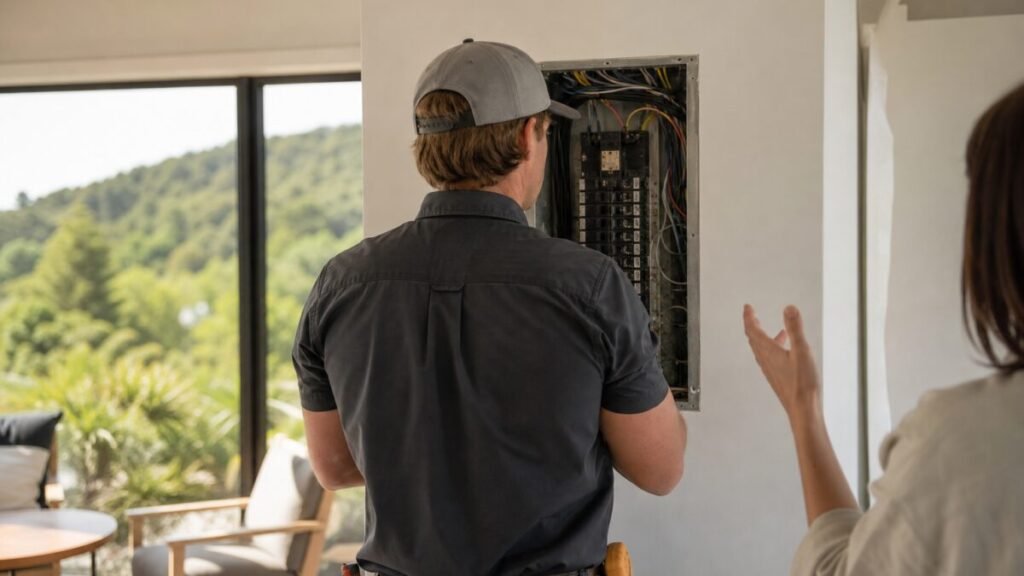
In New Zealand, most electrical work must be carried out by a licensed electrician registered with the Electrical Workers Registration Board (EWRB). Hiring an unlicensed electrician can leave you with unsafe work, void insurance, and no legal recourse if something goes wrong.
This guide walks you through exactly how to find, verify, and hire a qualified electrician in New Zealand, from checking registration to understanding costs, paperwork, and what to do if things go wrong.
Why Hiring a Licensed Electrician Matters
Electrical work is dangerous and tightly regulated in New Zealand for good reason. A registered electrician has completed formal training, passed competency assessments, and maintains ongoing registration with the EWRB. They carry insurance, understand the Electricity (Safety) Regulations 2010, and can legally issue the paperwork you need.
Unlicensed electrical work can result in house fires, electrocution, failed building inspections, insurance claims being declined, and difficulty selling your home. The registration system exists to protect you from both immediate safety risks and long-term legal and financial consequences.
How to Check if an Electrician Is Registered in NZ
Before hiring anyone, verify their registration. You can check an electrician’s registration for free at ewrb.govt.nz or the EWRB public register at kete.mbie.govt.nz/EW/EWPRSearch by searching their name or registration number.
Ask the electrician for their registration number upfront. A legitimate tradie will have no problem providing it. Check the register yourself rather than taking their word for it. The register shows their registration class, expiry date, and any disciplinary history.
NZ Webz lists 9 Trades & Home Services businesses, including Resolve Electrical, a Hamilton electrical company carrying out residential, commercial and industrial installation, repair and design work. When searching for electricians in your region, always verify EWRB registration as your first step.
What Registration Classes Mean and Which One You Need
There are three main EWRB registration classes:
- Electrician: Can carry out electrical installation and maintenance work on fixed wiring in homes, businesses, and industrial sites. This is the registration class you need for most home electrical work.
- Electrical Service Technician: Works on appliances and equipment, not fixed wiring. They can repair your oven or heat pump but cannot legally install new circuits or power points.
- Electrical Apprentice: Must be supervised by a registered electrician and cannot work independently.
For residential work like installing power points, rewiring, or upgrading your switchboard, you need a registered Electrician. Make sure the person doing the work holds the right class of registration for the job. If an apprentice is on site, confirm a registered Electrician is supervising them.
Typical Electrician Costs in NZ
Electrician hourly rates in New Zealand typically range from $85 to $140 plus GST, with most domestic electricians charging $95 to $120 per hour. Typical call-out fees range from $80 to $150.
| Cost Component | Typical Range (plus GST) |
|---|---|
| Hourly rate | $85–$140 |
| Domestic hourly rate (most common) | $95–$120 |
| Call-out fee | $80–$150 |
The call-out fee usually covers the electrician’s travel and first portion of work. Some electricians waive it if the job takes several hours. Prices vary by region, with Auckland and Wellington electricians typically charging toward the higher end of the range, while those in smaller regional centres like Whangarei, Nelson, or Dunedin often sit lower. Complexity of work and whether it’s an emergency call-out also affect pricing. Always ask for a detailed quote before work begins.
What Questions to Ask Before Hiring
Get clear answers to these questions before you commit:
- What is your EWRB registration number and class?
- Can you provide a written quote including hourly rate, call-out fee, materials, and GST?
- Will you issue a Certificate of Compliance for this work?
- Do you carry public liability insurance?
- When can you start and how long will the job take?
- What warranties do you offer on workmanship and materials?
- Can you provide references from recent similar jobs?
A professional electrician will answer all these questions readily. Vague answers or reluctance to provide documentation are red flags.
The Certificate of Compliance Explained
Certificates of Compliance must be issued within 20 working days of completing prescribed electrical work. This document is your legal proof that the work was done safely and to code.
When your electrician provides the CoC, check that it includes the electrician’s name and registration number, a description of the work completed, the date of completion, and the electrician’s signature. The document should reference AS/NZS 3000 compliance. File the original CoC with your property records. You’ll need it when selling your home, dealing with insurance claims, or during council inspections. If you lose it, the electrician can usually provide a copy, but keeping the original safe saves hassle later.
If an electrician says you don’t need a CoC for work that clearly involves new wiring or circuits, walk away. They’re either not registered or trying to cut corners.
Electrical Safety Inspections: When and How
It is recommended that homes be inspected for electrical safety every 5–10 years, or when buying or selling a home. Older houses and those about to be renovated are cases where a check by a registered electrician is most worthwhile.
To book an inspection, contact a registered electrician and ask for a full electrical safety check. The electrician will inspect your switchboard, wiring, earthing, power points, and fixed appliances. They’ll identify any safety hazards, code violations, or aging components that need replacement. Expect the inspection to take one to three hours depending on property size. The electrician should provide a written report detailing findings and recommended repairs.
If you’re buying a home, arrange the inspection before settlement so you can negotiate repairs or price adjustments. If you’re selling, having a recent inspection report shows buyers the electrical system is safe and compliant.
Special Requirements for Landlords
Landlords must ensure rental properties have electrical safety checks every 4 years by a registered electrician and must fix electrical faults within 2 weeks of notification. These checks are a legal requirement, not optional.
Landlord electrical compliance checklist:
- Book a registered electrician for a full safety inspection every 4 years maximum
- Keep written records of all inspections and Certificates of Compliance
- Fix any electrical faults identified by the electrician within 2 weeks
- Provide tenants with copies of inspection reports if requested
- Ensure all electrical work is done by EWRB-registered electricians, never unlicensed contractors
- Include inspection dates and records in your property management files
Failing to meet these requirements can result in fines, tribunal orders, and liability if a tenant is injured due to faulty electrical work. Budget for regular inspections and prompt repairs as part of your rental property maintenance costs.
Red Flags: How to Spot Unlicensed Electricians
Watch for these warning signs when hiring an electrician:
- Cannot or will not provide an EWRB registration number
- Offers to do the work “cash only” or unusually cheap compared to other quotes
- Says a Certificate of Compliance isn’t necessary when regulations require one
- Has no business address, website, or verifiable references
- Pressures you to start immediately without a written quote
- Cannot show proof of public liability insurance
- Offers to do work described as being done by a registered electrician but sends an apprentice or labourer to work unsupervised
- Suggests shortcuts to “save money” that involve skipping safety steps or paperwork
If something feels off, trust your instincts and find someone else. Check the EWRB register to confirm registration status before handing over any money or allowing work to begin.
Getting Multiple Quotes and Comparing Safely
Get at least three written quotes for any significant electrical work. When comparing quotes, look beyond the bottom line. A quote should include:
- Hourly rate or fixed price
- Call-out fee
- Estimated hours
- Materials and their costs
- GST
- Payment terms
- Timeline
- Whether a Certificate of Compliance is included
The cheapest quote isn’t always the best. Compare what’s included, the electrician’s qualifications and reviews, their availability, and how professionally they communicate. A slightly higher price from a registered, insured, responsive electrician is worth it.
You can find electricians and other trades professionals through NZ Webz’s Trades & Home Services directory, which also includes specialists like CJ Building Services, a family-run Whangarei builder focused on new builds and renovations in Northland, and Tasman Bay Plumbing Services, Richmond-based plumbers serving Nelson, Richmond and Motueka. Cross-trade coordination often matters for larger renovation projects.
Homeowners can legally replace switches, socket outlets, and light fittings in their own home without a registered electrician, provided the work does not involve the switchboard. However, check with your local council whether a building consent is required before attempting any DIY electrical work, as some modifications still trigger consent requirements even if you’re legally allowed to do the work yourself. For everything else, hire a professional.
What to Do If Something Goes Wrong
If your electrician fails to issue a Certificate of Compliance within 20 working days, doesn’t complete work to the standard quoted, or you suspect the work is unsafe, take these steps:
- Contact the electrician in writing (email is fine) outlining the problem and requesting they fix it within a reasonable timeframe
- If they don’t respond or refuse to remedy the issue, lodge a complaint with the Electrical Workers Registration Board through their website
- For disputes about payment or contract terms, contact the Disputes Tribunal if the amount is under $30,000
- If you believe the work is unsafe, stop using the affected circuit and contact another registered electrician for a second opinion and safety assessment
- Notify your insurance company if faulty electrical work has caused damage to your property
The EWRB investigates complaints about registered electricians and can take disciplinary action including suspension or cancellation of registration. Failure to issue required Certificates of Compliance is a breach of registration obligations and is taken seriously.
Keep all quotes, invoices, emails, and photos of the work as evidence. Document everything in writing. This makes complaints and disputes much easier to resolve.
Next Steps: Hiring Your Electrician
Before you hire an electrician, complete this checklist:
- Verify EWRB registration number on the official register
- Get at least three written quotes with full cost breakdowns
- Confirm the electrician will issue a Certificate of Compliance if required
- Check they carry public liability insurance
- Read recent reviews or ask for references
- Agree on timeline, payment terms, and scope of work in writing before work starts
- Save the electrician’s contact details and registration number for future reference
- File the Certificate of Compliance with your property records once received
Taking these steps protects your home, your family, and your investment. You can search for registered trades professionals including electricians through NZ Webz’s business categories or browse by region. If you’re a registered electrician looking to reach more customers, you can submit your website to the directory.
Frequently asked questions
How much does an electrician cost in New Zealand?
Electrician hourly rates in New Zealand typically range from $85 to $140 plus GST, with most domestic electricians charging $95 to $120 per hour. Call-out fees typically range from $80 to $150. Auckland electricians may charge at the higher end, while smaller regional centres often sit lower in the range.
How do I check if an electrician is registered in NZ?
You can verify an electrician's registration for free at ewrb.govt.nz or the EWRB public register at kete.mbie.govt.nz/EW/EWPRSearch by searching their name or registration number. The register shows their registration class, expiry date, and any disciplinary history.
What is a Certificate of Compliance and when do I need one?
A Certificate of Compliance is a legal document that electricians must issue for prescribed electrical work such as new circuits, power points, and rewiring. It confirms the work meets safety regulations and must be issued within 20 working days. Keep it with your property records for insurance and resale purposes.
Can I do any electrical work myself in New Zealand?
Homeowners can legally replace switches, socket outlets, and light fittings in their own home without a registered electrician, provided the work does not involve the switchboard. Check whether your council requires a building consent before starting. All other electrical work must be done by a licensed electrician.
What do I do if my electrician doesn't provide a Certificate of Compliance?
If your electrician fails to issue a CoC within 20 working days, contact them in writing. If they still don't comply, you can lodge a complaint with the Electrical Workers Registration Board at ewrb.govt.nz, as failure to issue required documentation is a breach of their registration obligations.
Sources
- gofox.nz/news/find-a-reliable-electrician
- ewrb.govt.nz
- unicorns.co.nz/blog/how-much-does-an-electrician-cost-in-nz
- tradiefinder.co.nz/guides/when-to-call-an-electrician
- worksafe.govt.nz/managing-health-and-safety/consumers/safe-living-with-electricity/getting-electrical-work-done
- fieldservice.tptsolutions.co.nz/blog/certificate-of-compliance-nz-electricians
- valuehub.co.nz/hiring-guides/how-to-choose-an-electrician-in-new-zealand
- topchoice.co.nz/blog/signs-you-need-an-electrician-now
- capitaelectrical.co.nz/post/common-electrical-questions-auckland-homeowners-ask-answered
- electricianquotes.co.nz/blog/electrical-safety-compliance-nz
Written by the team at NZ Webz. Checked November 2026.